26 August 2026, Centara Grand at Central Plaza Ladprao, Bangkok
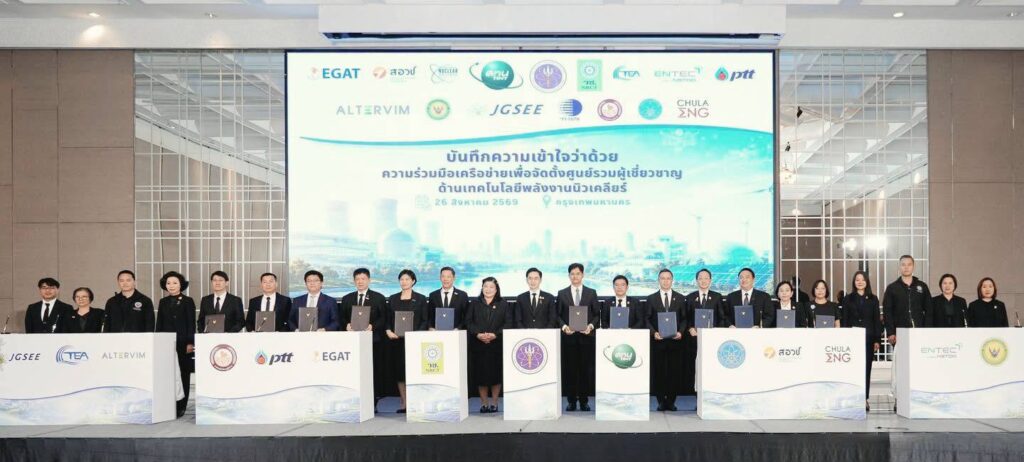
The Ministry of Higher Education, Science, Research and Innovation (MHESI), through the National Science and Technology Development Agency (NSTDA) and its National Energy Technology Center (ENTEC), has joined 13 partner organizations in signing a Memorandum of Understanding (MoU) to establish “the Hub of Talents for Nuclear Energy Technology (HOTNET).” Supported by the National Research Council of Thailand (NRCT), the initiative aims to strengthen Thailand’s network of expertise and human resources in nuclear energy technology, supporting research, development, assessment, and regulatory readiness, including capabilities related to Small Modular Reactors (SMRs) in accordance with international standards.
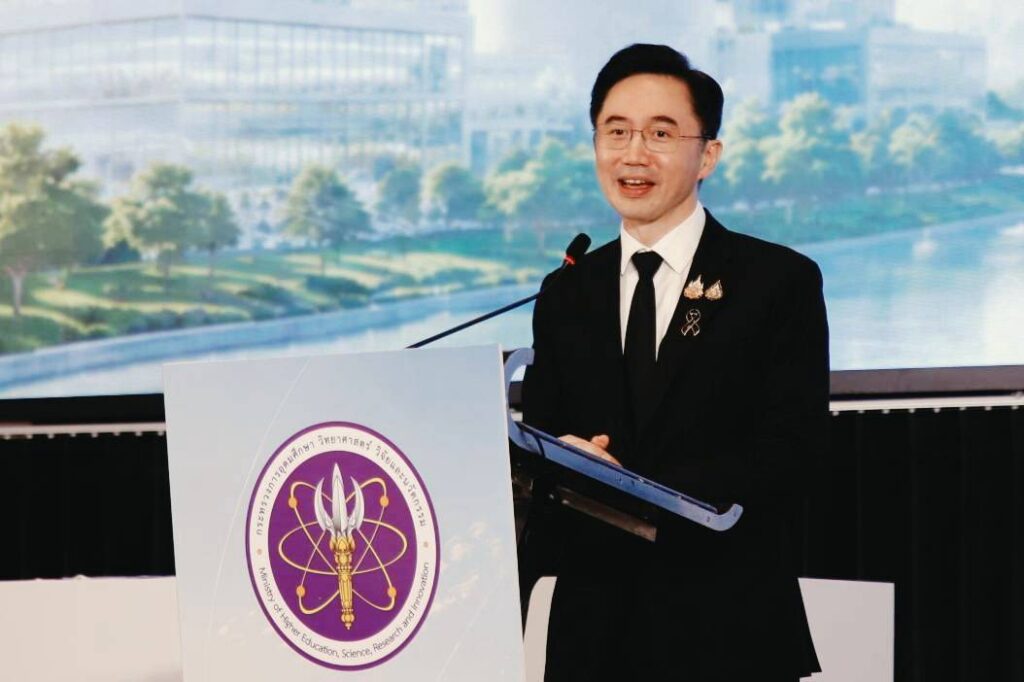
The signing ceremony was presided over by Prof. Dr. Yodchanan Wongsawat, Deputy Prime Minister and Minister of Higher Education, Science, Research and Innovation, with Dr. Wiparat De-ong, Executive Director of NRCT, serving as witness to the agreement.
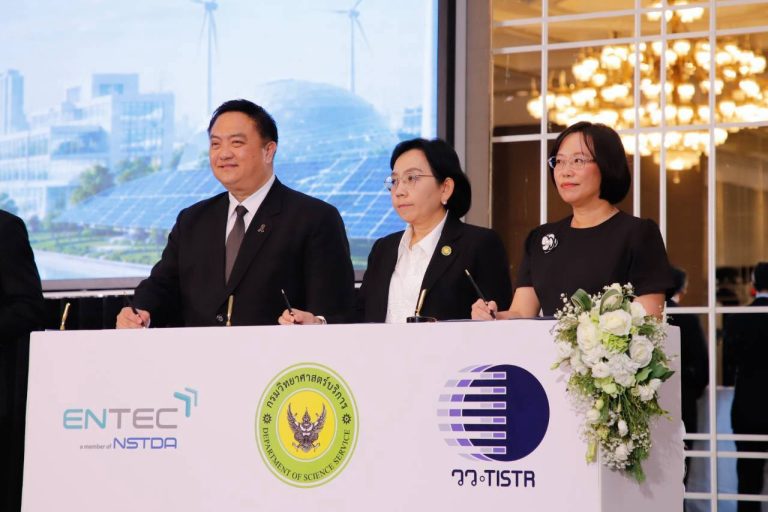
ENTEC’s participation in HOTNET reflects NSTDA’s continued commitment to advancing energy technology research and innovation in support of Thailand’s energy transition. Through this collaboration, ENTEC will contribute to connecting researchers, experts, infrastructure, and industry stakeholders while supporting workforce development and knowledge exchange in nuclear energy technologies. The initiative seeks to bridge research and innovation with real-world applications and national priorities.
Representing NSTDA at the signing ceremony was Dr. Paween Naramatkul, Executive Vice President of NSTDA.
The HOTNET consortium brings together 13 leading organizations from across Thailand, comprising government agencies, state enterprises, universities, research institutions, and industry, including:
- Thailand Institute of Nuclear Technology (Public Organization) (TINT)
- Electricity Generating Authority of Thailand (EGAT)
- Office of Atoms for Peace (OAP) through the Nuclear and Radiation Regulatory Academy (NRA)
- PTT Public Company Limited
- Office of National Higher Education Science Research and Innovation Policy Council (NXPO)
- Provincial Electricity Authority (PEA)
- Faculty of Engineering, Chulalongkorn University
- Altervim Co., Ltd.
- National Science and Technology Development Agency (NSTDA) through the National Energy Technology Center (ENTEC)
- TOT Employees Club Association
- Department of Science Service (DSS)
- Joint Graduate School of Energy and Environment (JGSEE), King Mongkut’s University of Technology Thonburi (KMUTT)
- Thailand Institute of Scientific and Technological Research (TISTR)
The establishment of HOTNET highlights Thailand’s need to prepare for the evolving global energy landscape, particularly as nuclear technologies and SMRs gain increasing attention as potential low-carbon energy options. Building a strong foundation of expertise and knowledge is essential for evaluating technological readiness, safety, economic viability, and potential environmental and social impacts before any future deployment in the country.
Under the HOTNET framework, TINT will serve as the coordinating organization, integrating national expertise and infrastructure in nuclear technology. The 13 partner organizations will work together to advance research, develop specialized training programs, facilitate technology transfer, foster talent development, and strengthen international networks.
Through this collective effort, HOTNET aims to establish a solid foundation of people, knowledge, technology, and infrastructure, enhancing Thailand’s capacity to assess and prepare for nuclear energy technologies and Small Modular Reactors. The initiative will also support the advancement of energy research and innovation, contributing to a secure, safe, and sustainable clean energy future for the nation.
Photo courtesy of the Thailand Institute of Scientific and Technological Research (TISTR).
